
Published April 29, 2026
Last Updated: April 2026
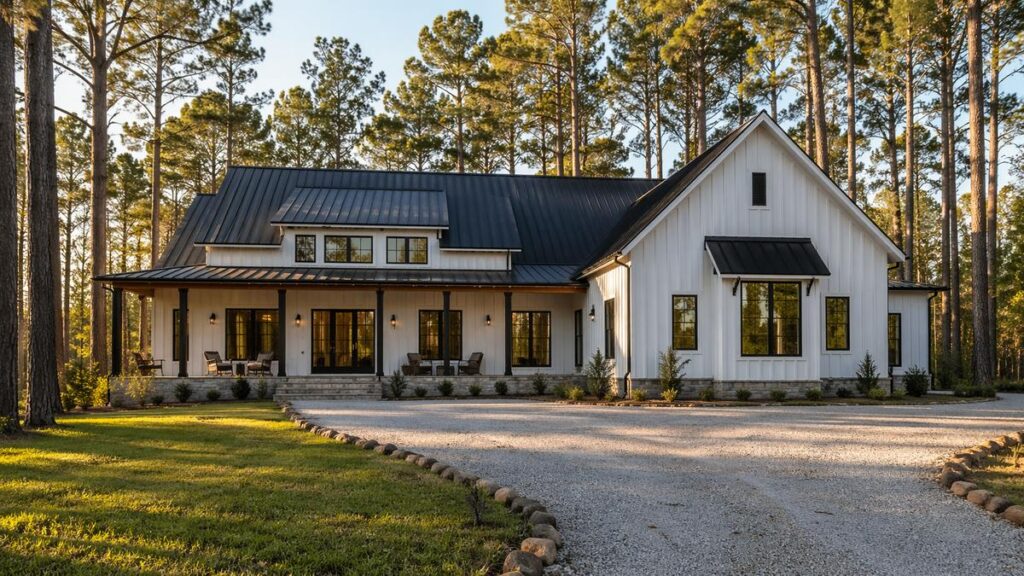
Yes — if you qualify for a USDA Section 502 construction-to-perm loan, a VA One-Time Close construction loan, or certain specialty conventional programs, you can build a custom home on rural Texas land with zero dollars out of pocket in 2026. These federal programs finance the land and the build as a single loan, with no down payment required. Thousands of rural Texas homes are built this way every year.
I meet a lot of people who assume they can’t afford to build a house. “I don’t have a down payment.” “My income isn’t high enough.” “I’m a veteran but I don’t really understand the VA benefit.” Here’s the truth most real estate agents don’t bother to explain: if you’re willing to build your primary residence on a rural lot in Texas, there are three federal loan programs that will cover the land AND the build with nothing out of your pocket.
USDA and VA construction-to-perm loans finance 100% of the land + build as a single loan — no down payment, one closing, one set of closing costs. These aren’t gimmicks — they fund thousands of rural Texas home builds every year.
Who Can Build a Home With Zero Down in Texas?
Before we go further, let me be direct about who these programs fit and who they don’t. I’d rather spend ten paragraphs telling you the truth than ten paragraphs selling you on a program that won’t work for you.
USDA $0-Down Construction-to-Perm — the broadest-reach program. The house gets built on a rural-designated lot (verify any address at eligibility.sec.usda.gov). Your household income must be under the USDA cap for the county — for most of rural Texas in 2026, that’s around $119,850 for a household of 1–4 people, climbing higher for larger families. Credit score 640+ is typical. This is for your primary residence only.
VA $0-Down One-Time Close Construction — the cleanest deal in mortgage lending. You need eligible VA entitlement (active duty, veteran, eligible reservist, or surviving spouse). There’s no income cap — income just has to support the payment by VA’s debt-to-income and residual-income tests. Credit 620+ typically. The VA funding fee is often waived for veterans with service-connected disability.
FHA 3.5% Down Construction — not zero, but close. Not every lender offers a one-time-close FHA construction loan, but the specialists do. Credit 580+, 3.5% down, which on a $450,000 land-plus-build comes out to roughly $15,750 — real money, but a long way from the $50–$90K a conventional buyer needs.
If you’re reading this and thinking “that actually might describe me,” keep going. However, if you’re looking for a weekend cabin, a vacation home, or a rental — none of these programs will work. They’re specifically built to get middle-income families and veterans into their primary home without requiring a down payment they don’t have.
How Does a One-Time Close Construction Loan Work?
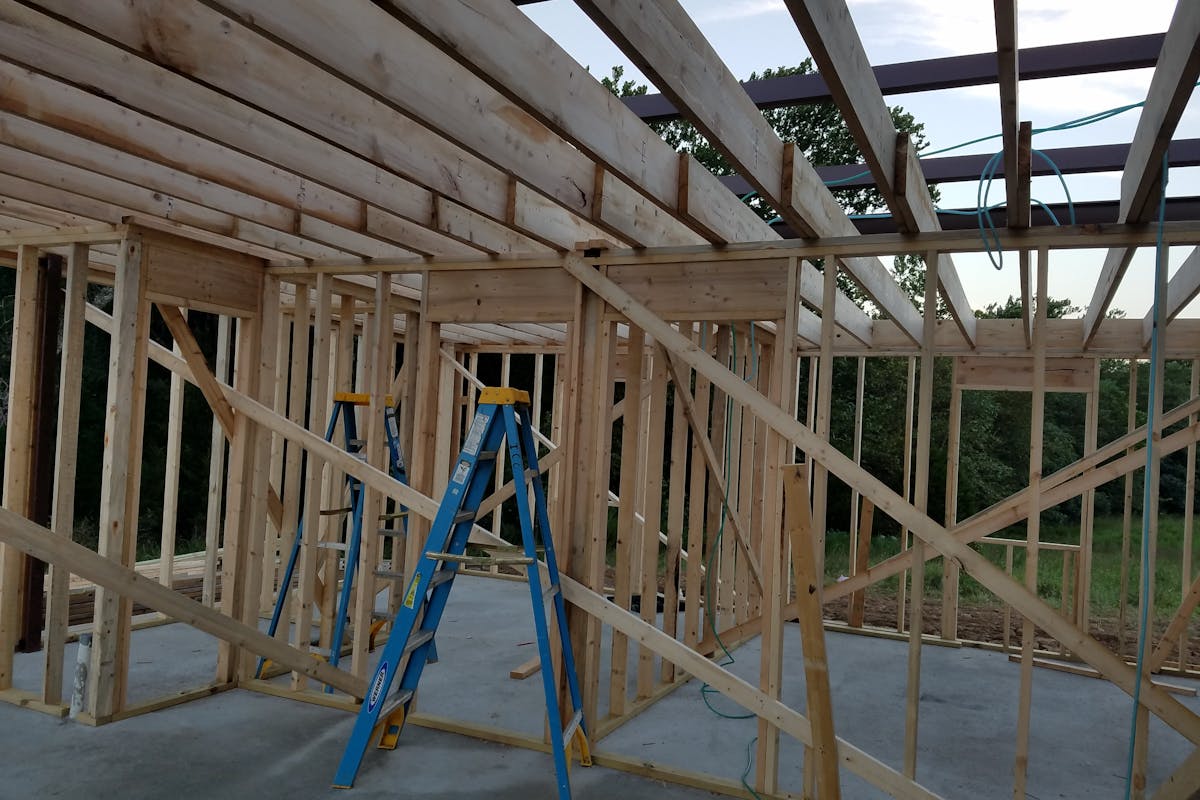
A one-time close (OTC) construction loan combines the construction financing and permanent mortgage into a single loan with one closing. Most people think a construction loan means two loans — one for construction, then you “refinance” into a mortgage when the house is done. That’s the old way, and it was brutal — two sets of closing costs, and if rates moved against you during the build, you got caught holding the bag.
One-time-close changes that completely. Here’s the sequence:
- You apply once. The lender approves you for the total — lot purchase plus build cost — as a single loan.
- You close once. At closing, the lender buys the lot and the construction draw account is funded.
- The builder draws from the account on a schedule as the house goes up.
- Automatic conversion. When the certificate of occupancy is issued, the loan automatically converts to your permanent mortgage at the rate you locked at closing.
- One set of closing costs. One appraisal. One credit pull. One rate lock.
During construction, you’re paying interest only on the drawn portion — not the whole loan amount. Additionally, most programs allow the interest-only payments to be rolled into the construction budget, meaning you may not pay anything out of pocket during the entire build.
Most agents and lenders don’t do enough construction deals to be comfortable explaining the process. The specialists do — and if you work with one, the process is no more complicated than buying an existing home.
What Does the Monthly Payment Actually Look Like?
Let me run real 2026 numbers using a lot I have listed in Deer Forest, New Waverly — 1 acre at $92,500, USDA-eligible, VA-eligible. The neighbor finished a custom 3,197 sq ft home in 2024 that Walker County CAD values the improvements at $539,460.
Assume a mid-range 2,200 sq ft custom build at $180/sq ft (realistic 2026 for upper-middle-finish in Walker County). That’s $396,000 for the build plus $92,500 for the lot = $488,500 total financed.
For comparison, the median rent for a 3-bedroom house in Walker County in spring 2026 is approximately $1,800–$2,200 per month for a basic existing home. Therefore, the math on a new custom build is higher monthly outlay — but you’re building equity from day one, locking in your housing cost for 30 years, and the home you end up with is something you actually want to live in.

What Are the Pieces Most Agents Don’t Walk You Through?
The Builder Has to Be Approved
On a USDA or VA construction loan, the builder must meet lender requirements — typically a licensed, insured, experienced custom builder with the financials to handle a draw schedule. In practice, this means choosing from the lender’s approved builder list or the subdivision’s approved builder roster. For most rural Texas subdivisions with covenants, there’s a builder roster already in place — which is a feature, not a bug. It means the homes on your street will be built to a common standard, protecting your property value.
The Lot Has to Meet Program Requirements
USDA requires a rural-designated area. VA requires a lot that meets minimum property standards. Both require a primary residence. Most of the better rural Texas subdivisions — anything in Walker, Montgomery, Polk, San Jacinto, or Trinity counties outside city limits — are USDA eligible. However, you want to verify before you commit. Any address I show a buyer, I verify on the USDA eligibility map before the first conversation.
There’s a Construction Timeline
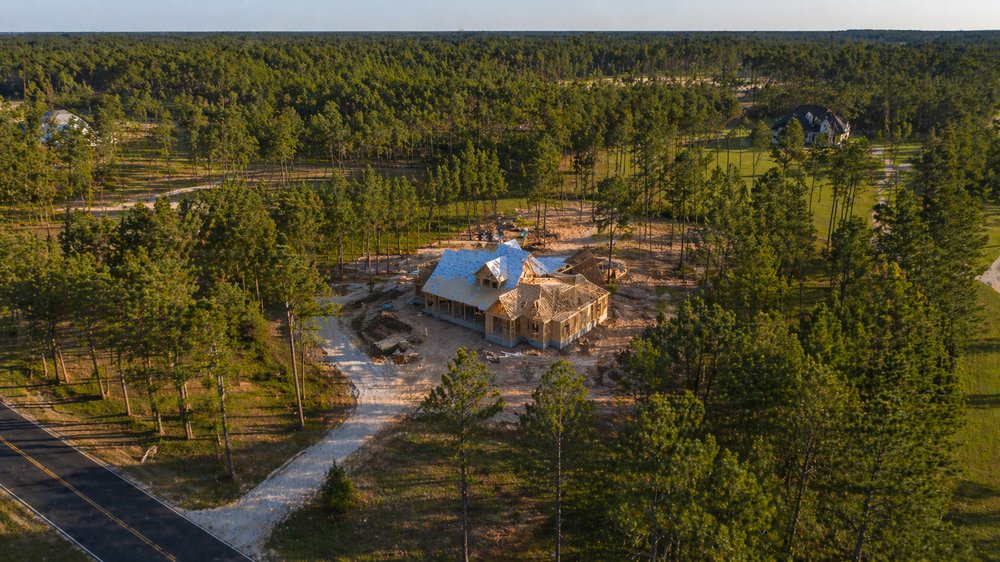
Most programs give you 6 to 12 months from closing to complete the home. If you want to buy the lot, sit on it for five years, and build later, a construction-to-perm loan is the wrong tool — you’d want a land loan instead.
Closing Takes Longer Than a Conventional Deal
A conventional home purchase closes in 30–45 days. A construction-to-perm closes in more like 45–75 days because the lender has to review plans, appraise the finished home value, verify the builder, and structure the draw schedule.
How Do I Help Buyers Through This Process?
I’m going to be honest about my role. I’m a REALTOR, not a loan officer — I can’t approve your loan. But I’ve spent enough time on rural land transactions in the Houston metro to know which lenders actually specialize in VA and USDA one-time-close, and which ones say they do but fumble the paperwork.
My typical process:
- Fifteen-minute call. I ask what you’re trying to build, your approximate household situation, and whether you’re a veteran. I’m figuring out which door is most likely to open.
- Lender introduction. I connect you with one of two or three lenders I trust for these specific programs. They do the actual pre-qualification.
- Lot selection. Once pre-qualified, we look at lots that fit your budget — typically 1–2 acres in a deed-restricted rural subdivision.
- Builder introduction. Based on the subdivision’s approved builder list, I set up conversations with two or three builders.
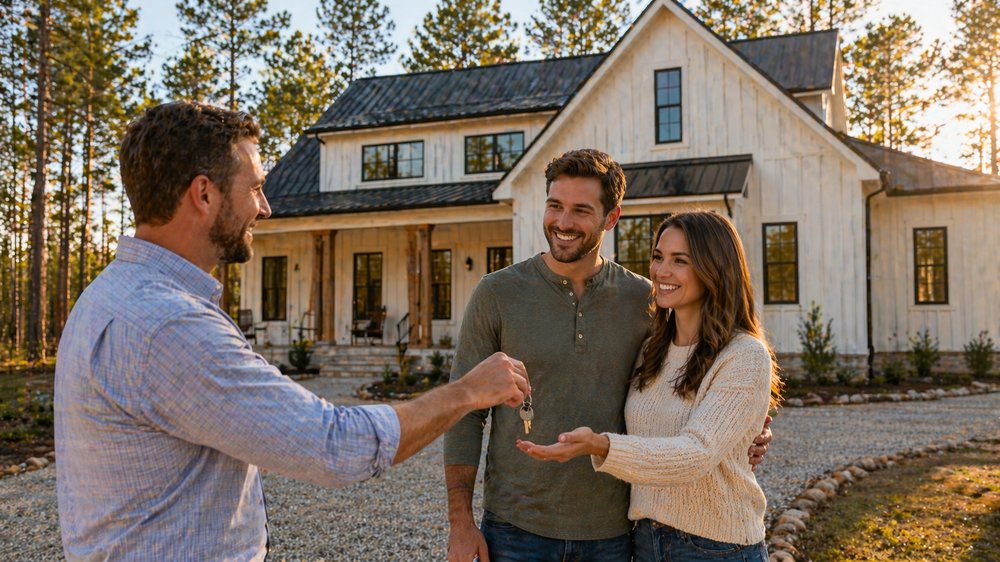
- One-time close. Everyone coordinates — lender, builder, title, me — and you walk into a single closing.
- Build period. The builder builds. The lender releases draws. I check in periodically.
- Certificate of occupancy. Your loan converts to permanent. You move in.
The whole process, start to finish, is typically 9–14 months from the first phone call to move-in day.
Where Does This Fit in the Current Market?
As of April 2026, rural Texas land inventory is elevated — there are more lots listed than buyers actively shopping, which is good for you as a buyer. Interest rates are still elevated compared to 2021, but USDA and VA rates are often 0.5–1.0 percentage points below conventional because of the government backing. That premium matters over 30 years.
I have a specific 1-acre cul-de-sac lot in Deer Forest, New Waverly that’s USDA-eligible, VA-eligible, and ready to build on today. The details and photos are on the property page. But the broader point isn’t one lot — it’s that the $0-down rural construction path is real, and it’s probably more accessible than you’ve been told.
With elevated rural land inventory and government-backed rates running 0.5–1.0% below conventional loans, spring 2026 is one of the better windows for rural construction buyers to lock in favorable terms.
FAQ: Building a Home With Zero Down in Texas
Can I really build a home in Texas with $0 out of my pocket in 2026?
Yes, if you qualify for a USDA Section 502 construction-to-perm loan or a VA One-Time Close construction loan. The total cost of land plus build is financed as a single loan, and most programs allow interest-only payments during construction to be rolled in so you pay nothing out of pocket.
What’s the difference between a USDA construction loan and a VA construction loan?
USDA is income-capped and rural-only but available to anyone who qualifies. VA is for eligible veterans and service members — no income cap, but you need VA entitlement. Both offer $0 down on primary residences. VA tends to have more flexibility on credit; USDA has broader rural eligibility.
How much income do I need for a USDA construction loan in Walker County?
In 2026, Walker County’s USDA income limit is approximately $119,850 for a 1–4 person household and rises to approximately $158,200 for households of 5–8 people. Your lender will walk you through whether your household qualifies.
Can I build a barndominium with a VA or USDA construction loan?
Yes, as long as the barndominium meets the subdivision’s architectural requirements and your lender’s standards — permanent foundation, conforming roof pitch, minimum square footage, and approved exterior materials.
What credit score do I need for a $0-down construction loan?
Most VA and USDA OTC lenders want 640+ for the best rate. Some will go to 620 or even 580 with strong compensating factors, but the rate increases. If you’re in the 580–620 range, there are still paths — they just take more structuring.
How long does it take from application to move-in?
Expect 9–14 months total: 30–75 days to close, then 6–12 months of construction. Production builders with stock plans often finish faster than full custom builds.
What if I already own land?
If you own the lot free and clear, the lender will often credit the lot’s value as your down payment. If you have a land loan, the construction-to-perm loan pays it off at closing.
What’s an Approved Builder and why does it matter?
For subdivisions with architectural review committees, the approved builder list is the roster of custom builders pre-vetted by the developer. Building with an approved builder means faster plan approval, confirmed compliance with subdivision standards, and easier lender funding.
Ready to Find Out What You’d Qualify For?
If you’ve read this far, you’re probably seriously considering building — or you know someone who should. Either way, the next step is fifteen minutes on the phone.
Text me at (936) 283-4176 or fill out the contact form. Tell me roughly what you’re trying to build, your approximate household situation, whether you’re a veteran, and where you’d want to build. I’ll tell you within that fifteen minutes which financing door is most likely to open for you.
No pressure, no sales pitch. I built my practice on the idea that if you give people honest information, the right buyers find you.
Sean McFarlin is a licensed Texas REALTOR® (TREC 623694) with Lion Drive Realty, specializing in rural land and custom home construction in the Conroe, Lake Conroe, and greater Montgomery County area. With 13+ years of experience helping families buy, sell, and invest in real estate, Sean brings both market expertise and a genuine commitment to making real estate decisions easier. Call (936) 283-4176 or visit seanmcfarlin.com to schedule your free consultation.
Last Updated: April 2026